




Customize your evaluations
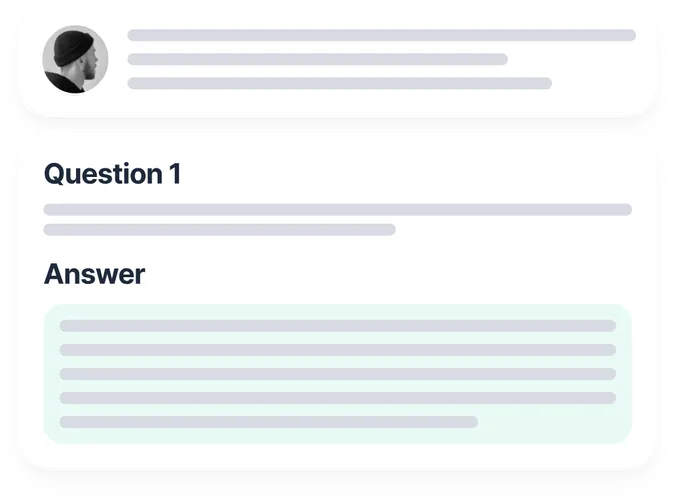
Create performance evaluations using preset templates, or come up with your own questions based on what you need to find out.

With Sesame, you activate feedback cycles and track your team’s progress in real time, all from a single screen, with no red tape and straight to the results
Create performance evaluations using preset templates, or come up with your own questions based on what you need to find out.
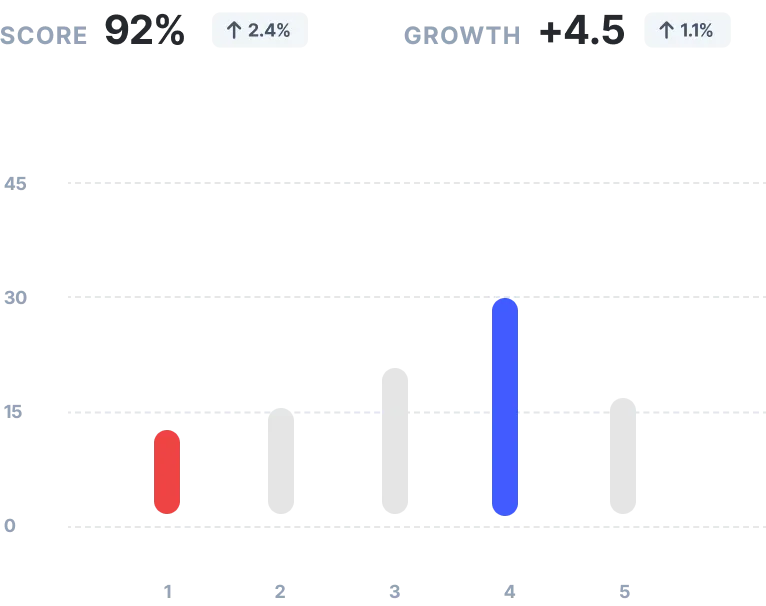
Understand your employees’ productivity levels and which variables affect them, so you can step in as soon as issues are detected.

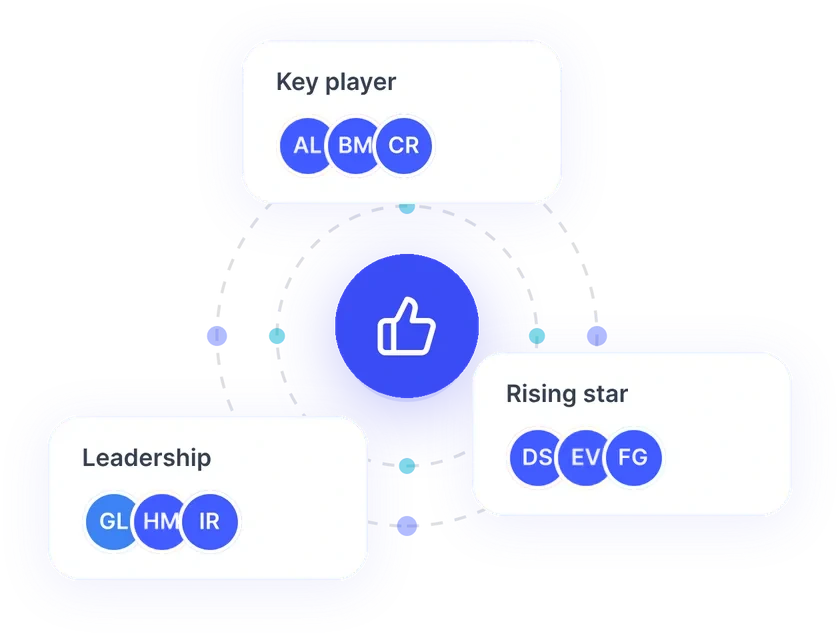
Identify who has leadership potential with a 9-box evaluation: cross-reference performance and potential in a visual matrix, and discover talent you hadn’t spotted yet.


95% of managers are dissatisfied with their company’s evaluation process and feel it has limited impact.
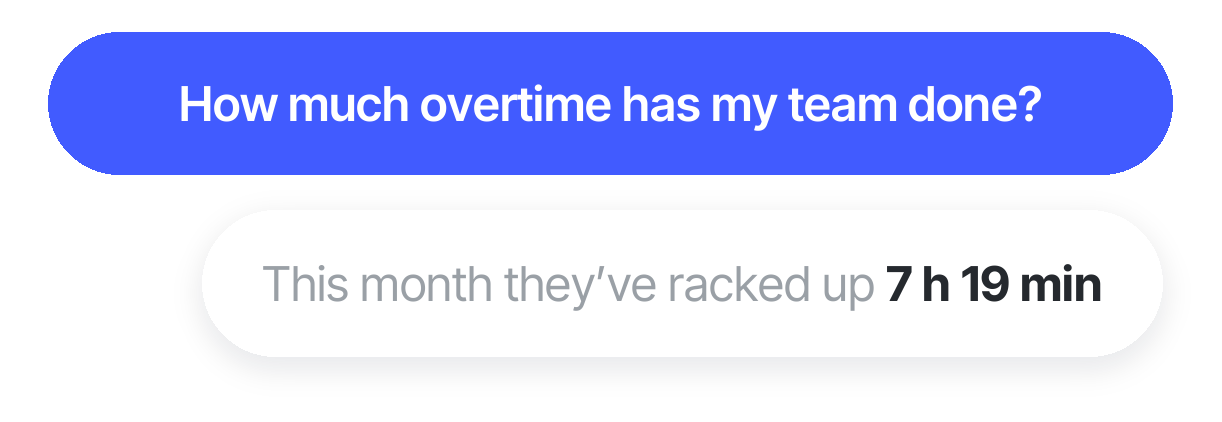
Sesame turns evaluations into conversations. Employees themselves, their peers, their direct manager, and the rest of the team all contribute feedback in real time. With the results, you can recognize good work and catch performance issues before they drive talent away.

Tailored competencies. Organize your questions into groups and subgroups, and weight each one according to what matters most to your company.
From score to action. Use the heat map to spot which competencies each team is weak in, and decide where to step in first.
Clear, comparable scoring. Turn on the scoring system to get an overall score for each evaluation, comparable against the maximum possible score.
Questionnaire reminders. Check who still needs to complete the evaluation and notify them with one click.


Schedule evaluations for a specific date, send them out as a one-time evaluation, or automate delivery for recurring evaluations.

Set up promotion plans, identify each employee’s standout skills, and help them develop those skills further.

Identify who needs help, on which topics, and offer training programs in the areas that need improvement.
Discover the types of performance evaluations in Sesame HR
These are the ones you’ll use to fully customize your evaluations. Decide what information you want to gather, write your own questions, and send them to your employees.
With this one, you’ll evaluate the employee from every angle that affects how they do their job at the company: self-assessment, peers, direct managers, other employees, and more.
This talent matrix, or quadrant, lets you rank employees by performance as well as potential. You’ll be able to spot future leaders and anticipate how your current talent will develop.
Request a free demo and our experts will help you choose the plan that best fits your needs. Plus, you can try it for free!
We answer your questions
Here you’ll find the most frequently asked questions about performance evaluation software for businesses.
Performance is a worker’s ability to carry out their tasks efficiently and with quality. Evaluating it matters because it helps determine whether employees are ready for their role and because it helps define the value they bring to the organization.
Carrying out a performance evaluation can benefit both the company and its employees. This practice gives employees a chance at better opportunities and a role that matches their profile. It’s also important for testing an employee’s leadership, communication, and integration within the team.
To measure organizational performance, HR teams run both one-time and recurring performance evaluations. These assess the work carried out by each team member individually. They typically include lists of questions designed to address specific topics, which are then reviewed to set up training plans or future projections for developing employees’ potential.
Yes, Sesame lets you create customized evaluation templates, tailoring the questions and competencies to your company’s specific needs. This makes it easier to align evaluations with organizational goals and each role’s key competencies.
Sesame offers a range of analytics tools, including charts based on numerical ratings to assess competencies, and distribution tables that compare employees’ scores. These tools help you visualize performance and make informed decisions.
Yes, evaluation data can be exported in formats like PDF, CSV, or Excel, allowing for external analysis and integration with other management systems.
Yes, you can add extra participants to an evaluation that’s already underway, as well as remove an evaluated employee or evaluator.
Sesame gives you three ways to build an evaluation: from scratch, with your own questions; with the Potential and performance evaluation template, to assess potential and performance based on feedback from managers and peers; or with the 9-box template, a matrix that cross-references performance and potential to identify your future leaders.